

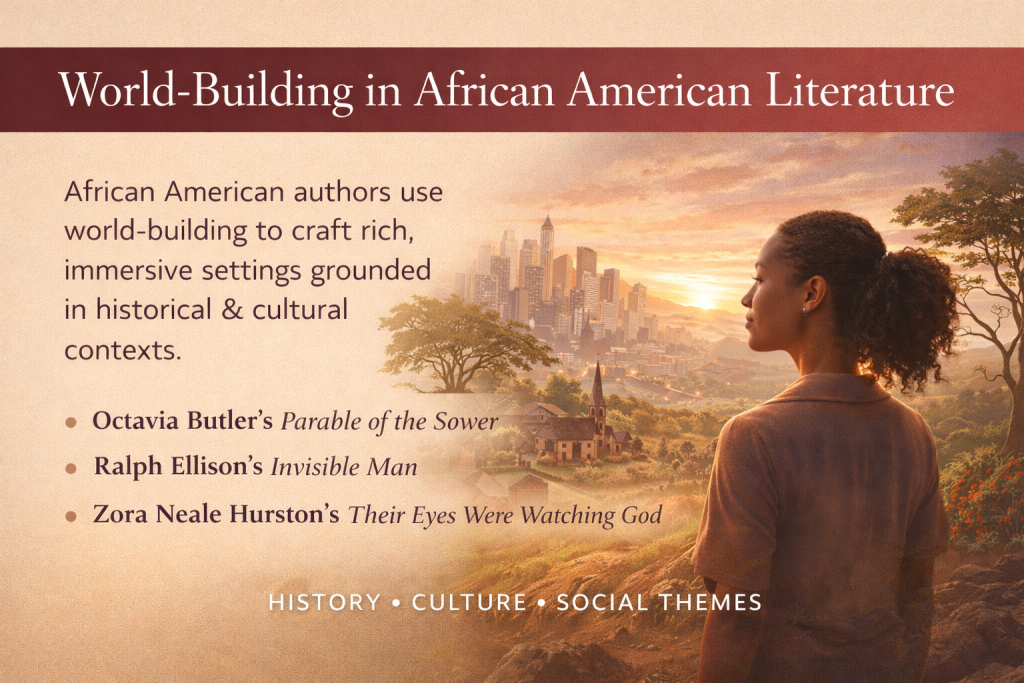
World-building isn’t just for fantasy or sci-fi novels—it’s an essential tool for creating rich, immersive settings in any genre, including those within African American literature. African American authors use world-building to create settings that reflect the historical, social, and cultural contexts of their stories, allowing readers to connect deeply with the characters and the narrative.
Examples of World-Building in African American Literature:
- Octavia Butler’s Parable of the Sower explores a dystopian future shaped by climate change, economic collapse, and social unrest. The world-building in this novel doesn’t just set the stage for the plot, but also deeply influences the protagonist’s journey. Butler’s meticulous attention to the environment, societal structures, and the psychological impact of living in such a world enhances the themes of survival and hope.
- Ralph Ellison’s Invisible Man uses the setting of Harlem and the broader American South to emphasize themes of race, identity, and social invisibility. The physical and social landscapes in the novel serve as metaphors for the protagonist’s internal struggle.
Tips for Building an Immersive Setting:
- Root your world in historical and cultural contexts: In African American literature, the setting often reflects the complexities of racial and social experiences. For example, in Zora Neale Hurston’s Their Eyes Were Watching God,” the setting of Eatonville is central to Janie’s identity and development. Consider how the time and place influence the character’s interactions, beliefs, and values.
- Use sensory details to enhance the experience: Descriptions of sights, sounds, smells, and textures bring your world to life. In Tayari Jones’ An American Marriage,” Jones paints a vivid picture of the lives of Celestial and Roy, deeply rooting their experiences in their surroundings, from Atlanta to prison, giving the setting emotional weight.
- Balance world-building with plot: Don’t overwhelm your reader with excessive details, but rather, weave the setting seamlessly into the narrative. In Colson Whitehead’s The Nickel Boys,” the oppressive and brutal environment of the reform school enhances the novel’s exploration of injustice, but the setting never overshadows the character-driven plot.
How to Make Your Setting Feel Real:
- Consider the role of socio-political issues, like racism, inequality, or generational trauma, in shaping the world your characters inhabit.
- Build a rich, authentic culture around your characters—whether it’s through language, traditions, or social dynamics.
- Think about how the environment impacts your characters’ decisions and relationships.
When done effectively, world-building in African American literature brings authenticity, depth, and relevance to the narrative, creating an immersive experience for the reader. By focusing on the cultural and historical dimensions of the world, aspiring authors can craft settings that not only support their story but also resonate with

