

What happens when the person who left the deepest wounds also leaves behind the greatest lessons? How do we honor the truth of someone’s memory when that truth is messy, painful, and laced with both sorrow and laughter?
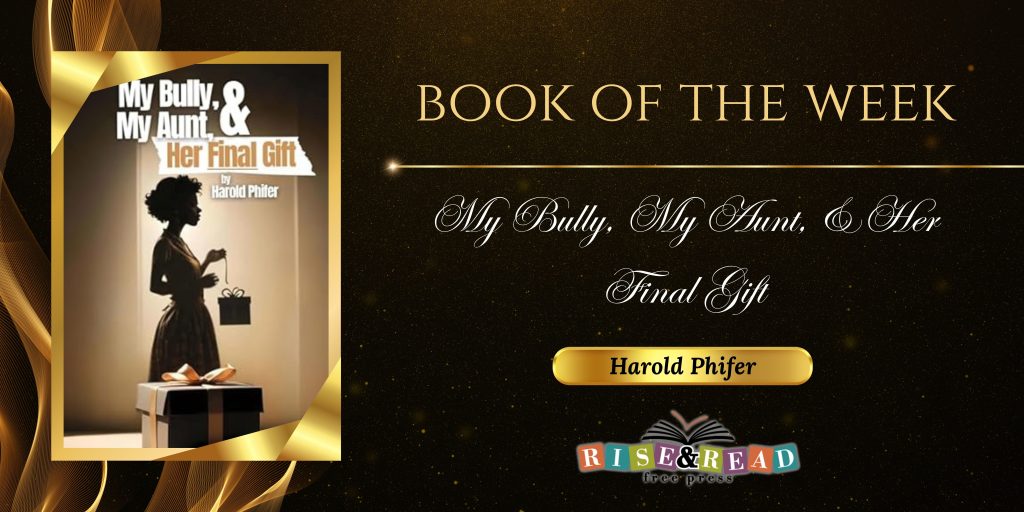
This week’s Book of the Week selection, My Bully, My Aunt, and Her Final Gift by Harold Phifer, dives headfirst into these questions with an emotional honesty that is as raw as it is refreshingly humorous. Through vivid storytelling and a perfect blend of grief and grit, Phifer takes readers on a journey into one of the most complicated relationships of his life that with his late Aunt Kathy.
More than a memoir, My Bully, My Aunt, and Her Final Gift is a courageous confrontation of family trauma, a masterclass in emotional resilience, and an unexpected testament to the power of perspective.
A Portrait of a Bully
Aunt Kathy is not the sweet, doting aunt you’d expect to read about in a typical tribute. Phifer makes it clear from the first page that his relationship with her was anything but nurturing. She was harsh, controlling, and often cruel, and yet she left an undeniable mark on his life.
Growing up under her roof meant living under constant judgment, enduring unpredictable mood swings, and surviving an emotional environment filled with landmines. Whether it was her twisted philosophies, outlandish house rules, or biting remarks disguised as “tough love,” Aunt Kathy ruled her home with an iron tongue.
But Harold doesn’t write to seek revenge. He writes to understand, to reflect, and ultimately, to heal. And in doing so, he offers a story that is unflinchingly honest, surprisingly funny, and profoundly human.
A Funeral Few Wanted to Attend
The memoir opens with a striking scene: the planning of Aunt Kathy’s funeral. It’s quiet. Sparse. There’s no crowd lining up to pay their respects, no loving tributes pouring in. The silence of the room speaks volumes about the life she lived and the impact she left behind.
But that silence becomes the catalyst for reflection. As Phifer organizes her final send-off, he’s flooded with childhood memories, some humorous, others harrowing, all instructive. He begins to piece together the lasting impact she had on his development, his relationships, and the very lens through which he sees the world.
In many ways, this book is his emotional eulogy not to celebrate who Aunt Kathy pretended to be, but to acknowledge who she truly was, and how surviving her gave him the tools to become the man he is today.
Pain, With a Side of Humor
What sets this memoir apart from others in the genre is its brilliant use of humor. Phifer has a gift for storytelling that makes even the most uncomfortable truths digestible. He doesn’t rely on comedy to mask his pain; instead, he uses it to frame that pain in a way that’s accessible, relatable, and often laugh-out-loud funny.
From anecdotes about Aunt Kathy’s obsessive need to label snacks to stories about holiday gatherings gone wrong, Phifer’s humor is sharp but never cruel. It’s the kind of humor that can only come from someone who’s done the hard work of healing. His ability to reflect on painful experiences with levity shows just how far he’s come and how powerful storytelling can be when wielded with both honesty and grace.
The “Gift” Hidden in the Grief
The title promises a “final gift,” and the beauty of this memoir lies in uncovering what that truly means. Aunt Kathy didn’t leave behind a legacy of love, but in her own chaotic, unintentional way, she gave Harold something much more valuable: clarity.
Through reliving these memories, Harold discovers how deeply she shaped his worldview, how her dysfunction taught him boundaries, how her criticisms taught him self-validation, and how her absence gave him the space to finally breathe. The “gift” is not tangible, but transformational. It’s the realization that even those who hurt us most can leave behind wisdom, lessons we carry not as burdens, but as building blocks.
This book is about reclaiming your story from those who tried to rewrite it. It’s about finding peace, not because someone changed, but because you did.
Who Should Read This Book?
If you’ve ever struggled with a toxic family dynamic, if you’ve questioned how to grieve someone who caused you harm, or if you’ve needed a voice to affirm that your pain is real, this book is for you.
My Bully, My Aunt, and Her Final Gift is especially impactful for:
- Adult children unpacking emotional or verbal abuse
- Readers navigating grief with mixed emotions
- Those craving stories of survival and emotional growth
- Fans of memoirs that mix laughter with life lessons
Whether you’re just beginning your healing journey or well on your way, this book offers validation, companionship, and maybe even a few well-earned laughs along the way.
My Final Thoughts
Harold Phifer has written something special, something rare. My Bully, My Aunt, and Her Final Gift doesn’t pretend to resolve all the questions we have about difficult family relationships. Instead, it offers something better: a conversation starter, a mirror, and a model for truth-telling that doesn’t require perfection or closure to be powerful.
It’s one of those books that makes you pause, reflect, and reevaluate your own story. And most importantly, it’s a reminder that healing doesn’t always come with flowers and apologies. Sometimes, it comes with silence, space, and the strength to say: This happened. It hurt. But it didn’t break me.
📘 Order your copy today:
🔗 Click here to purchase on Amazon

